


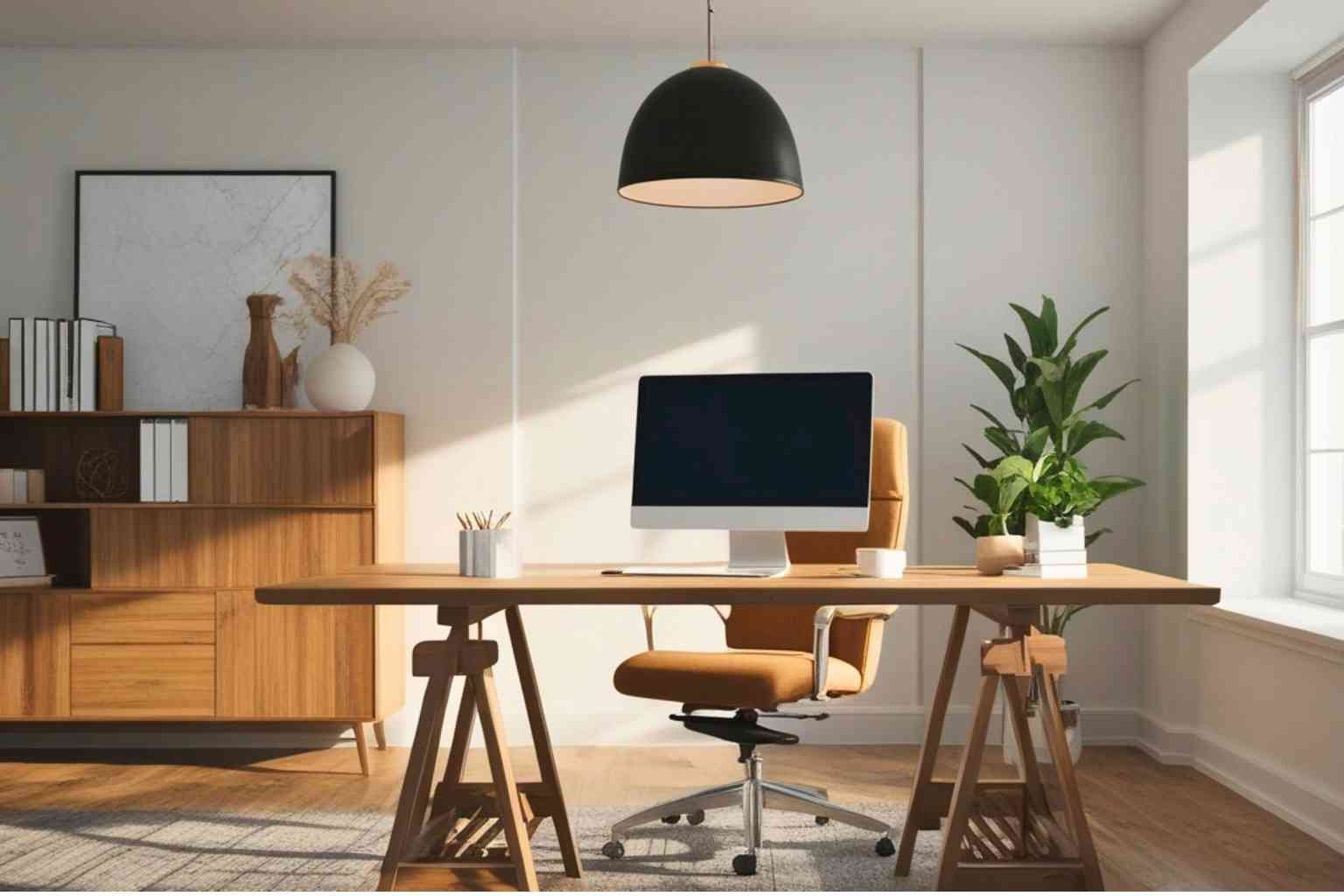
Many people have adopted remote work as a modern way of working. These days, many people work from home full time or part time. This shift has really made it important to set up a comfortable and productive home office. A neatly designed workspace facilitates attention, structure and work quality.
A home office doesn’t have to be spacious or expensive. Even a small space can feel like an effective work environment with careful design and smart organization.
1. Choose the Right Location
The first step for designing a home office is choosing your space. It should ideally be located in a quiet part of the house, free from distractions. It is best set up in a separate room, but you can also use a corner of the living room or bedroom.
Settling in a designated workspace ensures productivity throughout the work shift.
2. Use Comfortable and Ergonomic Furniture
It is important that you be able to work long hours comfortably. A comfortable chair and desk combined with proper posture also decrease the risk of physical strain. It recommends home-office furniture such as chairs that are height-adjustable and provide sufficient back support.
Ergonomics fits your space and needs and reduces back and neck aches.
3. Maximize Natural Lighting
Natural light can enhance mood and productivity. Moving your desk close to a window allows sunlight to hit the working area. Rooms filled with light tend to be more comfortable and alleviate eye strain.
If there are no options for natural light, the same ambience can be recreated by having warm LED lighting.
4. Keep the Workspace Organized
An order desk will on the other hand, help you focus. Containers: use shelves, drawers and storage boxes to help organize documents and office supplies.
A clutter-free and organized space reduces stress, too, helping people focus better on the task at hand.
5. Home Office Usefulness Design Features
There are many design elements that can enhance a home office experience.
- Sit-stand desks for healthy working conditions
- Wall mounted shelves for storage
- Equipment management systems for professional setups
- Desk organizers for office supplies
- Checking off the tasks at a whiteboard or planner
These features support productivity.
6. Add Personal and Creative Elements
A home office should be a space that is comfortable and inspiring. By introducing personal elements, for example art work, photographs or indoor plants, the workspace ambiance can be enhanced.
Office decor can be creative and help the space feel more approachable.
7. Manage Technology and Equipment
Technology such as computer, monitor and internet connectivity are the foundation of modern home offices. Get all your power outlets, internet connections and cable management sorted in your workspace
A good setup technically avoids interruptions in work.
8. Consider Space Saving Solutions
And not everyone has a big enough room to use as a home office. Maximizing Small Spaces with Furniture and Storage Solutions Foldable desks, floating shelves and compact chairs play a big role in smaller homes.
This helps the office stay comfortable by making effective use of space.
9. Tips for Creating a Productive Work Environment
Here are some practical tips to keep in mind when designing a home office:
- It will help in keeping a workspace similar for day to day work
- Clear the desk of unnecessary clutter
- Dimmer lighting helps decrease eye pressure
- provide a comfortable seating for long working hours
- Use the advice (and make sure you follow it).
These habits help maintain productivity.
10. Creating a Balance Between work and Home
Having to work from home comes with many challenges, one of them is the demarcation between professional life and the personal space. Setting up a dedicated home office space will help you delineate your work time from down time.
A well designed environment promotes discipline and focus.
Key Takeaways
There are three essential components to making a home office with anywhere from 1-3 people work effectively. By selecting the ideal environment, utilizing ergonomic furniture, optimizing lighting and keeping a clutter-free zone, anyone can set up a productive workspace at home. So reality now, thoughtful design makes remote work more effective and even pleasurable.
FAQs:
Q1. What is the most essential aspect of a home office?
Comfortable furniture and a place to work in peace are key productivity factors.
Q2. How to create a home office in a small space?
Yes, wall mounted storage and compact desks can help to maximize small areas.
Q3. How critical is lighting in a home office?
Proper lighting helps minimise eye strain and boosts work focus.
Q4. Is working from home away from living areas?
An isolated area is the best case, but a relatively peaceful corner may still work well.
Q5. What furniture do you need in a home office?
Good storage solutions, a good desk and a comfortable chair are very important
